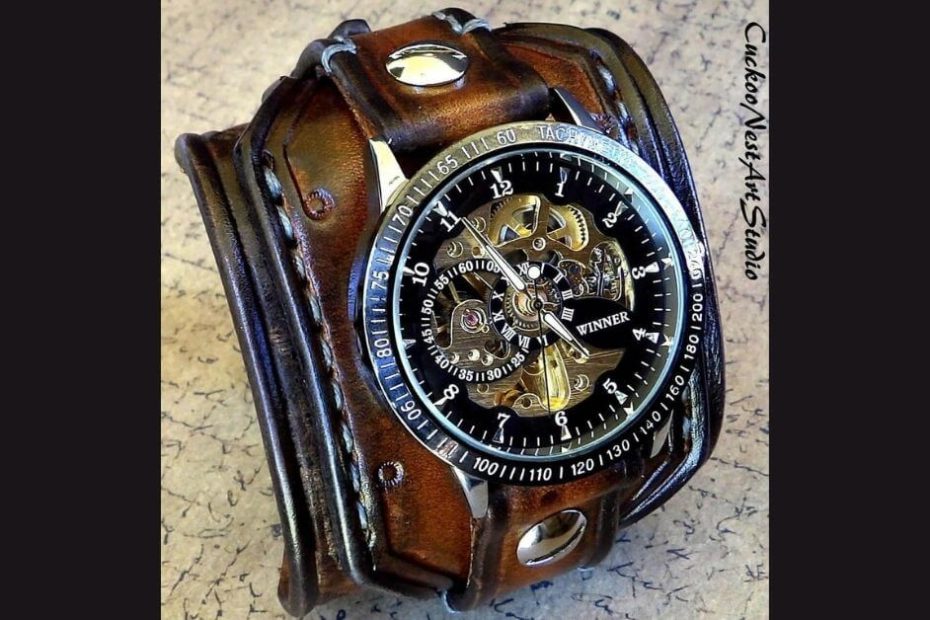
Hey! So you’re shopping for men’s leather watch straps and want to make sure you’re getting something that’ll actually last? Smart move.
Here’s what most people don’t realize: that leather strap you wear every day gets more abuse than almost any other leather item you own. It’s constantly flexing, dealing with sweat and moisture, getting banged around, and exposed to everything your day throws at it. Cheap leather can’t handle that kind of punishment – but quality leather? It actually gets better with it.
Here’s the thing that drives me crazy: most guys buying men’s leather watch straps have no idea what leather grades even mean. They see “genuine leather” and think they’re getting quality. Spoiler alert – you’re not.
I’ve been working with leather for years, and I can’t tell you how many times someone’s asked me, “Why did my leather watch strap crack after six months?” The answer is always the same: you got fooled by marketing instead of understanding leather grades.
Table of Contents
- It All Starts with Understanding Leather Grades
- The 5 Leather Grades Explained
- Full Grain: The Gold Standard for Men’s Leather Watch Straps
- Top Grain (Corrected Grain): The Compromise Choice
- Split Grain: The Leftovers
- Genuine Leather: The Marketing Trap
- Bonded Leather: Just Say No
- Which Leather Grade is Right for Your Watch Strap?
- How to Spot Quality When Shopping
It All Starts with Understanding Leather Grades
Before we dive into what makes the best men’s leather watch straps, you need to understand how leather grades work. It’s actually pretty simple once someone explains it without all the industry jargon.
When cowhide gets processed into leather, it goes through a splitting process. Think of it like slicing a thick piece of bread – you get different layers, and some are way better than others.
The top layer (closest to the hair) is where the premium leather comes from. This is what you want for men’s leather watch straps that’ll last decades.
The bottom layers are the leftovers – and that’s where most of the cheap stuff comes from that falls apart after a few months.
Here’s what most people don’t realize: there’s no official standard for leather grades. Tanneries basically make up their own systems, which is why shopping for men’s leather watch straps can be so confusing.
But we can break down leather grades into 5 main categories that actually matter for your watch strap purchase.
The 5 Leather Grades (Ranked Best to Worst)
When you’re shopping for men’s leather watch straps, here’s the hierarchy you need to know:
- Full Grain Leather (The best)
- Top Grain/Corrected Grain Leather (Very good)
- Split Grain Leather (Mediocre)
- Genuine Leather (Poor – despite the name)
- Bonded Leather (Garbage – avoid completely)
Let me break down what each of these leather grades means for your watch strap, because the differences are huge.

Full Grain: The Gold Standard for Men’s Leather Watch Straps
If you want men’s leather watch straps that’ll outlast the watch itself, full grain leather is what you’re after.
What Makes Full Grain Special?
Full grain leather contains the complete, intact grain of the hide. Nothing’s been buffed away, sanded down, or artificially smoothed over. You’re getting the real deal – exactly how nature made it.
Why it’s perfect for men’s leather watch straps:
- Incredibly durable – seriously, it’ll probably outlast you
- Develops amazing patina – gets more beautiful with age and wear
- Self-healing – light scratches actually disappear over time
- Breathes naturally – absorbs oils from your skin and gets more comfortable
- Unique character – every strap has its own personality

What to Expect with Full Grain
The good stuff:
- Natural markings like scars, grain variations, even old insect bites
- Starts out pretty stiff but breaks in beautifully
- Color deepens and richens over months and years
- That classic leather smell we all love
The reality check:
- More expensive upfront (but saves money long-term)
- Takes time to break in (patience required)
- Each strap looks slightly different (some people prefer uniformity)
- Can show water spots initially (they fade with conditioning)
Real-world example: I’ve seen vegetable-tanned watch straps that started out pale tan and after two years of daily wear developed this incredible rich cognac color with subtle darker patches where the owner’s wrist naturally rubbed. Meanwhile, his friend’s “genuine leather” strap from the same time period cracked and had to be replaced twice.
Types of Full Grain for Watch Straps
Vegetable-Tanned Leather This is the holy grail for men’s leather watch straps. Uses natural plant tannins, develops incredible patina, and has that sweet, earthy leather smell. Starts pale and can darken to rich browns and ambers over time.

Oil-Tanned Full Grain Pre-treated with oils for faster break-in. Still develops great character but starts softer. Good middle ground if you want full grain quality but less stiffness initially.
Top Grain (Corrected Grain): The Compromise Choice
Top grain leather comes from the same premium layer as full grain, but it gets some “corrections” during processing.
How It’s Different from Full Grain
The tannery takes that top layer and buffs or sands the surface to remove natural markings, then applies finishes for a more uniform appearance.
For men’s leather watch straps, this means:
- More consistent appearance across different straps
- Breaks in faster than full grain
- More resistant to water and stains
- Ages more predictably (less dramatic patina development)
When Top Grain Makes Sense
Honestly? Top grain isn’t bad leather. It’s still quality stuff. Choose it if:
- You want your strap to look the same in 5 years as it does today
- You prefer uniform appearance over natural character
- You need something more stain-resistant for your lifestyle
- You want faster break-in time
The trade-offs with top grain:
- Won’t develop the same dramatic character over time
- Slightly less durable due to surface processing
- Reduced breathability from protective coatings
- More predictable aging (some see this as a positive)
Split Grain: The Leftovers
Remember how I said the hide gets split into layers? Split grain leather is made from those bottom layers – basically the leftovers after the good stuff gets used.
What You’re Actually Getting
Split grain leather doesn’t contain any of the hide’s natural grain structure. It’s the fibrous part that remains, and it’s… not great for men’s leather watch straps.
Characteristics of split grain:
- No natural grain pattern
- Heavily processed with coatings and finishes
- Often embossed with fake grain textures
- Much less durable than top-layer leather
- Won’t develop any meaningful patina
Where You’ll Find It
Split grain often gets used for:
- Suede (which can actually be nice for casual straps)
- Lining material inside higher-quality products
- Budget leather goods trying to look more expensive
For watch straps? Unless it’s a weekend suede strap, you probably want to look elsewhere.
Genuine Leather: The Marketing Trap
Here’s where I have to break some bad news. Despite what the name suggests, “genuine leather” is actually one of the worst leather grades you can buy.
The Truth About “Genuine”
When you see “genuine leather” stamped on men’s leather watch straps, that’s not a quality indicator – it’s basically a legal disclaimer saying “this contains some leather somewhere.” It’s like a frozen dinner claiming “made with real chicken” – technically true, but that doesn’t mean it’s good.
What genuine leather actually is:
- Made from those bottom split layers I mentioned earlier
- Loaded with chemicals, plastics, and artificial coatings
- Often has polyurethane backing to hold it together
- Basically designed to trick customers into thinking they’re getting quality
How to Spot Genuine Leather
Red flags when shopping for men’s leather watch straps:
- Suspiciously cheap price for “leather”
- Perfectly uniform appearance with fake-looking grain
- Plasticky feel or smell
- No variation in color or texture
- Marketing that emphasizes “genuine” or “real” leather
The reality:
- Will crack and peel within months
- Zero breathability
- Never develops patina
- Feels like plastic
- Often smells like chemicals
Why Companies Use This Term
It’s pure marketing. They know people associate “genuine” with quality, so they slap it on inferior products. Don’t fall for it.
Bonded Leather: Just Say No
If genuine leather is bad, bonded leather is absolutely terrible. This isn’t even really leather.
What Bonded Leather Actually Is
Imagine taking leather scraps, grinding them into dust, mixing with vinyl and glue, then pressing it into sheets. That’s bonded leather – it’s like calling sawdust mixed with glue “wood furniture.”
The basic recipe:
- Shredded leather scraps and dust (sometimes as little as 20%)
- Vinyl, plastic, and synthetic fillers
- Industrial adhesives to hold it all together
- Fake grain patterns pressed on with heat
- Chemical dyes and finishes
For men’s leather watch straps: Just don’t. You’d honestly be better off with a quality rubber or fabric strap.
Why It Exists
It’s cheap to make and sounds like real leather to uninformed customers. Some manufacturers claim it’s “environmentally friendly” because it uses scraps, but when your watch strap falls apart in three months and goes straight to a landfill, how green is that really?
Which Leather Grade is Right for Your Watch Strap?
Now that you understand leather grades, here’s my honest recommendation for men’s leather watch straps:
Go with Full Grain If…

- You want something that lasts decades
- You love the idea of your strap developing character over time
- You appreciate natural materials and craftsmanship
- You’re willing to invest more upfront for long-term value
- You don’t mind a break-in period
Consider Top Grain If…
- You prefer consistent appearance
- You need something more stain-resistant
- You want faster break-in
- You like the idea of quality leather but want predictability
Skip Everything Else
Split grain, genuine leather, and bonded leather just aren’t worth it for men’s leather watch straps. You’ll end up replacing them repeatedly, which costs more in the long run.
How to Spot Quality When Shopping for Men’s Leather Watch Straps
Since leather grades aren’t always clearly marked, here’s how to identify quality when you’re shopping:
The Smell Test
Quality leather smells good – earthy, rich, maybe slightly sweet. If it smells like chemicals, fish, or plastic, walk away. That’s your nose telling you it’s heavily processed junk.
Feel the Weight and Texture
Good men’s leather watch straps have substance. They should feel solid, not flimsy. Quality leather also has natural texture – you should be able to see and feel grain patterns, not artificial stamping.
Look at the Edges
This is where corners get cut on cheap leather. Quality straps have clean, finished edges. If they’re rough, painted over, or look like they’re trying to hide something, that’s a red flag.
Check the Price Reality
I hate saying this, but quality costs more. If you’re seeing men’s leather watch straps with “full grain leather” for $20, something’s not right. Good leather requires time, skill, and quality materials.
Ask Direct Questions
Don’t be afraid to ask:
- What grade of leather is this?
- Is this full grain or top grain?
- What type of tanning was used?
- Where does the leather come from?
If they can’t answer or get evasive, that tells you everything.
Natural Markings are Good Signs
Counterintuitively, imperfections often indicate quality. Natural scars, grain variations, and slight color differences show you’re getting real, unprocessed leather. Perfect uniformity often means heavy processing.
The Vegetable-Tanned Advantage for Watch Straps

Most of the best men’s leather watch straps use vegetable-tanned leather, and here’s why:
What Makes Vegetable-Tanned Special
- Uses natural plant tannins instead of chemicals
- Develops that incredible patina everyone talks about
- Has that classic leather smell and feel
- Starts firm but becomes incredibly supple
- Can last literally decades with proper care
The Break-in Reality
Vegetable-tanned leather starts out pretty stiff. Your first few weeks wearing it might feel a bit rigid, but that’s normal. As it absorbs oils from your skin and flexes with daily wear, it becomes incredibly comfortable and forms to your wrist.
Patina Development
This is where vegetable-tanned leather really shines. Over months and years, it develops this rich, deep color that can’t be replicated artificially. Every mark and scratch becomes part of its story.
Common Mistakes When Buying Men’s Leather Watch Straps
Mistake #1: Choosing Based on Price Alone
The cheapest option almost always uses inferior leather grades. You’ll spend more replacing cheap straps than buying one quality piece.
Mistake #2: Falling for Marketing Terms
“Genuine leather,” “premium leather,” “luxury leather” – these are often meaningless marketing terms. Focus on the actual leather grade.
Mistake #3: Expecting Perfection
Natural leather has character marks. If you want plastic perfection, you don’t actually want real leather.
Mistake #4: Not Considering Your Lifestyle
If you’re hard on your gear, invest in full grain. If you need something more formal and consistent, top grain might work better.
Mistake #5: Ignoring the Break-in Period
Quality leather needs time to break in. Don’t judge a full grain strap by how it feels on day one.
Caring for Your Investment
Once you’ve invested in quality men’s leather watch straps, here’s how to keep them looking great:
Regular Maintenance
- Wipe down with a soft, dry cloth regularly
- Let it dry naturally if it gets wet
- Condition lightly every few months (don’t overdo it)
- Store properly when not wearing
How Different Grades Age: The 5-Year Test

Here’s something most people never see – how different leather grades actually hold up over years of daily wear:
Full Grain After 5 Years:
- Rich, deep patina with character marks
- Softer and more comfortable than when new
- Natural variations that tell the story of your life
- Often looks better than the day you bought it
Top Grain After 5 Years:
- Consistent appearance with some softening
- Slight darkening but predictable changes
- Maintains original shape and structure well
- Looks essentially the same as when new
Genuine/Split Leather After 5 Years:
- If it lasted this long, you’re lucky
- Cracking along stress points
- Faded, artificial-looking surface
- Probably on your third replacement by now
When to Worry

- Deep cracks – Usually means it’s been neglected or is low quality
- Peeling or flaking – Sign of bonded or heavily processed leather
- Strong chemical smells – Not normal for quality leather
The Bottom Line
Look, you’re going to wear your watch almost every day. You’re going to sweat on that strap, bump it into things, expose it to sun and rain and whatever else life throws at you.
You can buy cheap “genuine leather” men’s leather watch straps and replace them every six months, or you can invest in full grain leather once and have it look better five years from now than it does today.
Key Takeaways to Bold:
Understanding leather grades isn’t just about being particular – it’s about making informed decisions that save you money and get you something that actually improves with age.
The bottom line: You can buy cheap “genuine leather” men’s leather watch straps and replace them every six months, or you can invest in full grain leather once and have it look better five years from now than it does today.
Quick Decision Flowchart
Not sure which leather grade to choose? Here’s a simple decision tree:
Start here: What’s your budget and priorities?
→ Want the absolute best that lasts decades?
✓ Choose Full Grain Leather (preferably vegetable-tanned)
→ Want quality but prefer consistent appearance?
✓ Choose Top Grain Leather
→ Budget-conscious but still want real leather?
✓ Save up for Top Grain instead of settling for less
→ Seeing “Genuine Leather” or “Bonded Leather”?
✗ Walk away – you’ll spend more replacing these repeatedly
The honest truth: If you’re not ready to invest in at least top grain leather, you’re better off with a quality fabric or rubber strap until you can afford real leather.
Quick Reference Guide
When shopping for men’s leather watch straps, remember:
✓ Look for “full grain” or “top grain” – These are the only grades worth considering
✓ Ask about the tanning process – Vegetable-tanned is usually best
✓ Check the smell – Good leather smells good
✓ Feel the weight and texture – Quality has substance
✓ Expect to pay more – Quality costs more upfront but saves money long-term
✗ Avoid “genuine leather” – It’s marketing deception
✗ Skip bonded leather entirely – It’s not real leather
✗ Don’t buy on price alone – Cheap leather is expensive in the long run
✗ Don’t expect perfection – Natural character is a feature, not a bug
Now you know the difference between leather grades. Go find yourself men’s leather watch straps that are actually worth strapping on. Your wrist (and your wallet) will thank you in the long run.

Ready for the Next Step?
Now that you understand leather quality, you might be wondering about styling and fit. We’ve got you covered:
For choosing the right style: Check out our guide on How to Choose Men’s Watches with Leather Bands That Match Your Style– because understanding quality leather is just the beginning.
For styling tips: If you’re considering thicker leather bands, our post How to Style Thick Leather Band Watches Without Overdoing It covers everything you need to know about wearing bold leather with confidence.
Quality leather deserves quality styling. These guides will help you make the most of your investment in real leather that’s built to last.

Hey there, I'm Paul, the guy behind every stitch, cut, and curve at Cuckoo Nest Art Studio. I don't do mass-produced. I don't do shortcuts. What I do is pour my heart into creating bold, one-of-a-kind leather pieces that aren’t just accessories but statements.
When I’m not busy turning high-quality leather into something that lasts a lifetime, I’m here writing about craftsmanship, style that stands out, and the kind of quality that refuses to compromise.
You won’t find trends or fluff here, just honest conversations about what it means to love what you own and appreciate the art behind it.
Looking for leather with attitude? Stick around—I think we're going to get along just fine.
🔗 Subscribe to stay connected and discover more about quality over shortcuts.
- Why Handmade Leather Gifts Make the Best Personalized Gifts for Him - November 21, 2025
- The Art of Stacking Bracelets: Style Guide & Gift Ideas for Every Occasion - October 2, 2025
- Men’s Leather Watch Straps: The Ultimate Guide to 5 Leather Grades - September 1, 2025
